3 min read
Skilled expertise on display at Komatsu’s Advanced Technician Competition
- Events,Blog
4 min read
As mining operations evolve, the ability to safely and efficiently deploy new technologies depends not only on the equipment itself, but on how well people are prepared to use it. In Brazil, Komatsu and its subsidiary Immersive Technologies partnered with a major iron ore producer to address this challenge head-on – demonstrating how early, integrated collaboration can unlock safer outcomes, faster readiness and stronger operational performance.
Preparing for AHS: addressing training, safety and operational risk
The customer, a large surface iron ore operation under constant production pressure, was preparing to implement Autonomous Haulage Systems (AHS) – a significant operational shift and the first deployment of its kind for Komatsu in Brazil. While AHS offers clear long-term benefits, it also introduces a critical short-term challenge: how to train operators and support personnel, many of whom are new to mining, without increasing risk or disrupting production.
Leaders at the site recognized traditional, field-based training methods would create a bottleneck. Training inexperienced personnel directly in live pit environments would increase exposure to safety risks and place additional strain on already limited production equipment. Seasonal conditions, such as heavy rains, and the difficulty of releasing personnel from active operations further complicated the situation. Without a new approach, the operation faced slower workforce readiness, higher risk during early learning and potential impacts to productivity.
An integrated approach: redefining training as a strategic solution
Komatsu and Immersive Technologies engaged early – well before implementation decisions were finalized – to address these challenges collaboratively. Rather than positioning training as a downstream requirement, the teams worked with the customer to define it as a strategic component of the AHS solution itself.
This early engagement focused on a shared set of critical questions: Where are operators most exposed to risk during training? How much learning can be shifted away from the mine site? And how can training be structured to reduce reliance on production equipment?
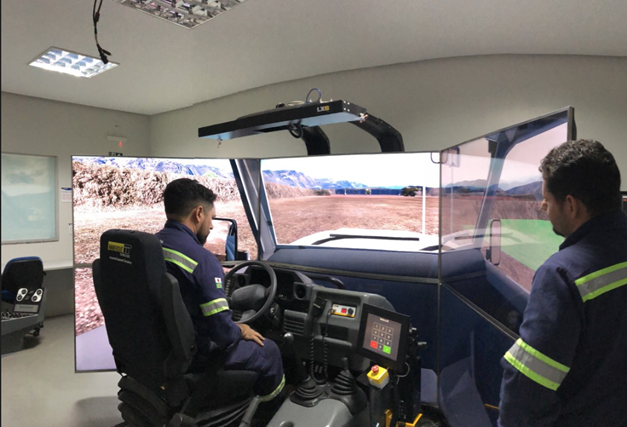
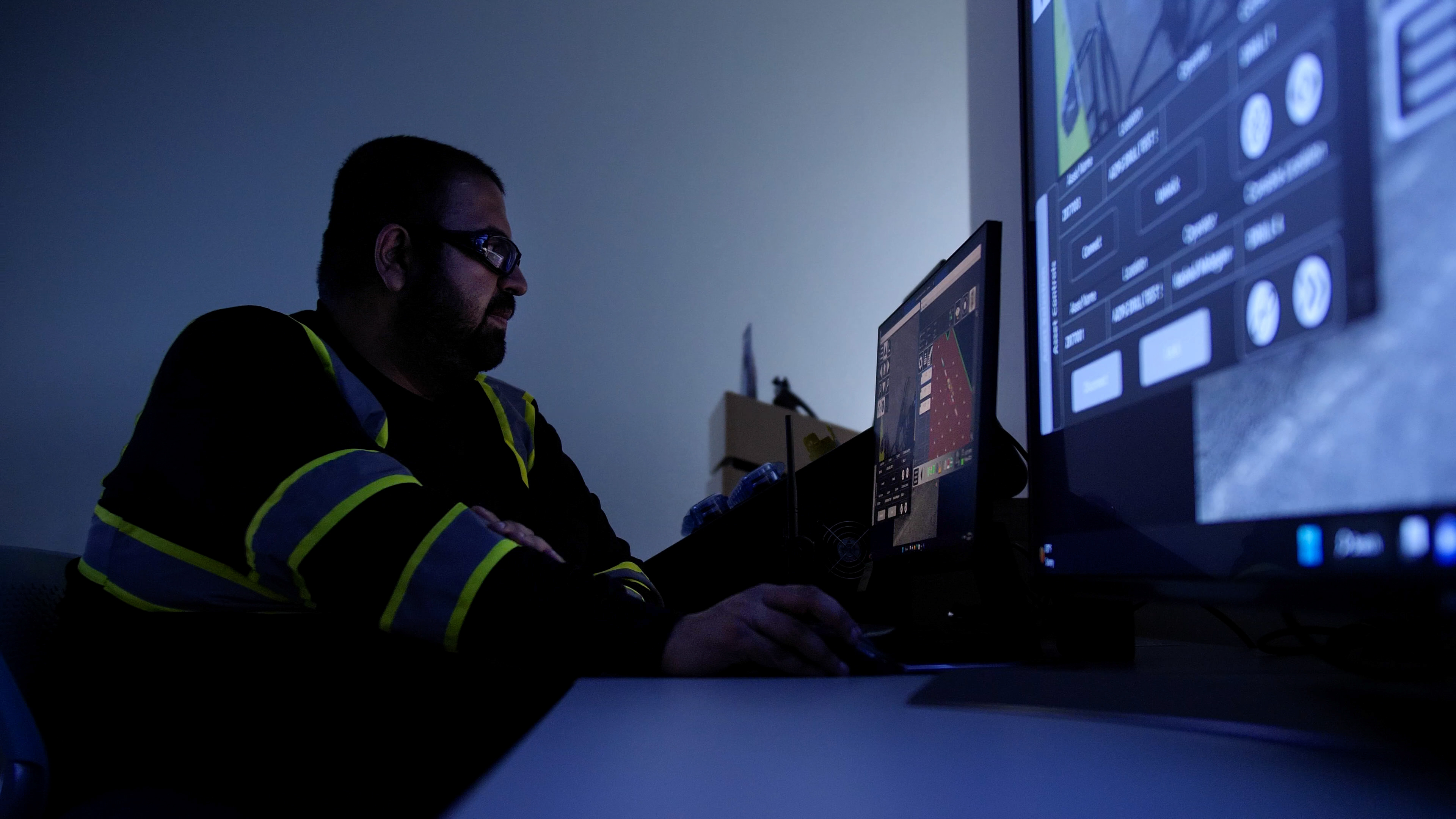
By aligning these questions, Komatsu and Immersive, with the customer, developed an integrated training approach that combined simulator-based learning, virtual missions, and structured eLearning. This allowed operators to build foundational skills and confidence in a controlled environment before entering live operations.
One of the most important aspects of the approach was the ability to keep training moving under real operational constraints. With off-site training established at the Komatsu Training Centre (CTKA), Komatsu Brazil and Immersive Technologies were able to maintain a consistent training flow even when field conditions, production pressure or equipment availability limited on‑site training.
The impact was immediate. By restructuring the training flow, approximately five days of early learning were moved out of the field and into simulator and virtual environments. This not only reduced operator exposure to risk during the most vulnerable stages of learning but also helped avoid tying up critical production equipment.
Leaders estimate this approach reduced initial AHS training time by approximately 40 percent, while supporting uninterrupted operations during deployment.
Feedback from those closest to the training reinforces these results. Site trainers highlighted the effectiveness of the blended approach, noting that eLearning and virtual missions helped “cement the idea in the learner’s head” and reach a wide range of learning styles. Simulator training played a pivotal role: for many operators, it was “the first time they had their hand on the equipment,” enabling them to enter the field with greater confidence and readiness.
In one example, a trainee with no prior mining experience was able, after just three weeks of simulator-based training, to confidently guide her mentor in operational tasks – demonstrating the potential of this approach to accelerate capability development.
Delivering measurable impact and advancing the One Komatsu model
Importantly, Komatsu Brazil and Immersive Technologies established clear roles and ongoing engagement models, including dedicated project management, training specialists and managed services support. By maintaining proximity to the operation and continuously capturing voice-of-customer feedback, the teams have been able to refine and improve the solution over time.
This case highlights a broader shift in how Komatsu delivers value. By integrating technology, training and services into a unified solution – and by engaging early with customers to co-develop that solution – Komatsu is helping mining operations address complex challenges more effectively.
It also demonstrates the strength of the “One Komatsu” approach. Through close collaboration between Komatsu Brazil and Immersive Technologies, the solution was tailored not only to the technical requirements of AHS, but also to the operational realities and cultural context of the region.
While leaders describe this as “Version 1.0,” the foundation is clear. Future enhancements will focus on further strengthening how training is positioned as a strategic lever from the outset, ensuring even tighter coordination to support continuous improvement.
For mining companies navigating the transition to automation, this case offers a clear message: success depends not just on deploying technology, but on preparing people. Through early, integrated collaboration, Komatsu is helping customers do both – safely, efficiently and with measurable impact.