.svg)

.svg)






3 min read
Oct 20, 2026
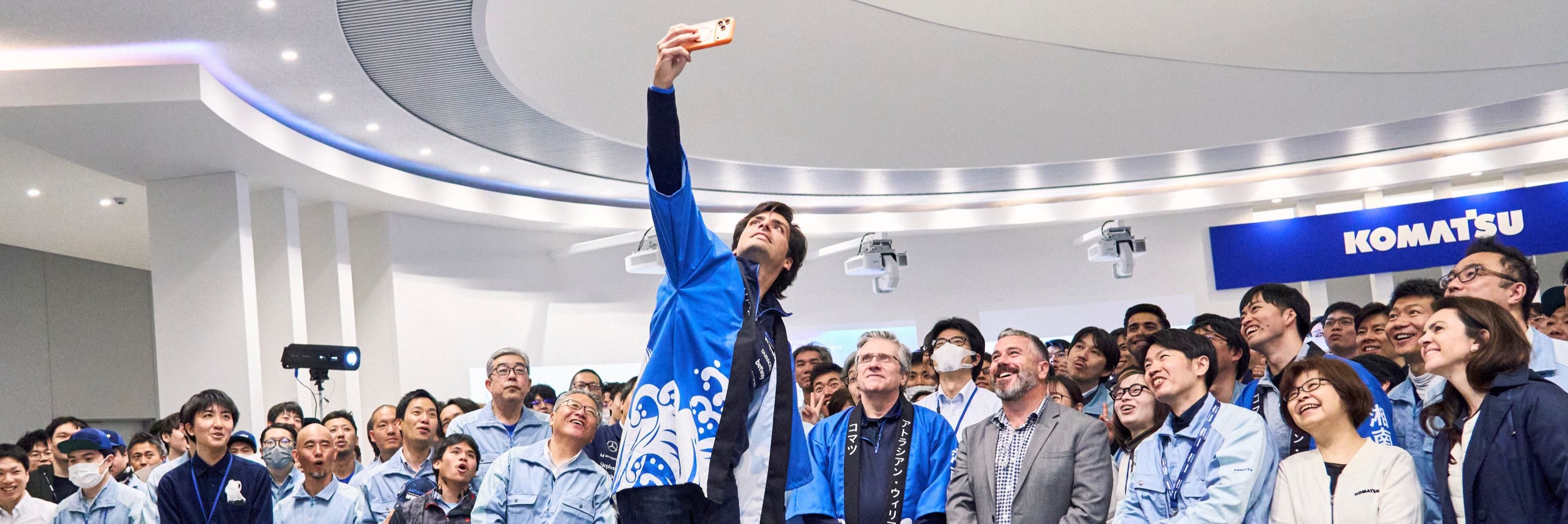
Komatsu and Atlassian Williams Racing find common ground in Düsseldorf
- Williams F1 partnership,Discover Komatsu,Blog
4 min read

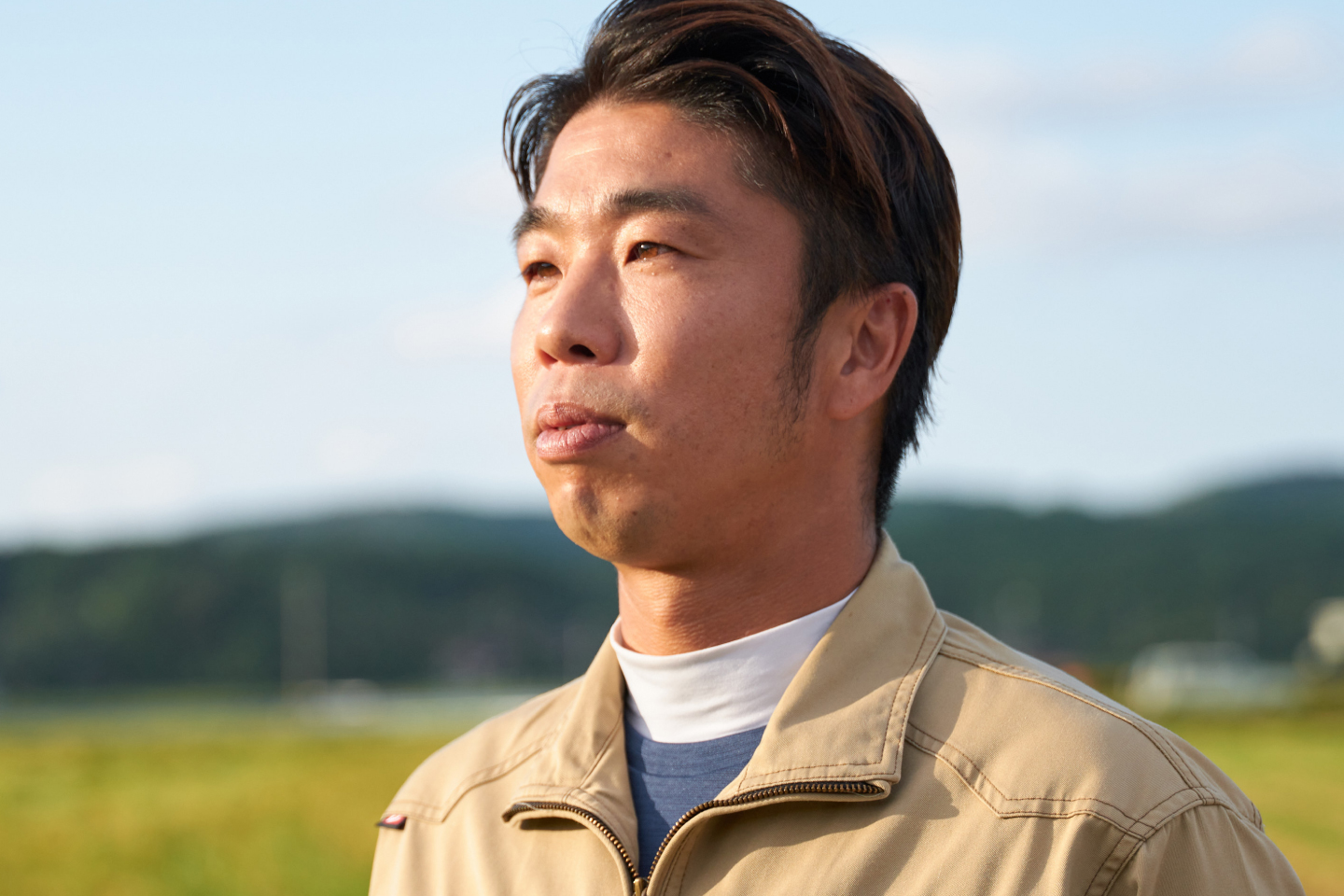
After a major earthquake hit Japan’s Noto Peninsula, Takahiro Ura surveyed the damage to the rice fields he had farmed for years. He was alarmed by what he saw: deep fissures, badly sunken areas and severely warped surfaces.
It was clear to farmers the land could not be farmed in this condition. Paddy fields would not be able to hold water for rice cultivation. Snow or rainfall would pose risks of landslides on the peninsula’s sloping, mountainous terrain, where terraced rice paddies cling to hillsides.
The challenges for farmers throughout the peninsula felt overwhelming. Some wondered if they could continue. But a collaboration established 10 years earlier proved pivotal in identifying a plan of action that would put farmers on a path to recovering their land and sustaining their community’s way of life. That path involved creativity, persistence, teamwork — and technology.
Helping preserve tradition
For centuries, Japan’s unique topography and deep-rooted traditions have fostered meticulous methods for managing farmland, forests and marine habitats. Passed down over many generations, those methods have sustained both food sources and natural resources. But the approach is labor-intensive. Productivity is limited and unpredictable, making farming increasingly less profitable.
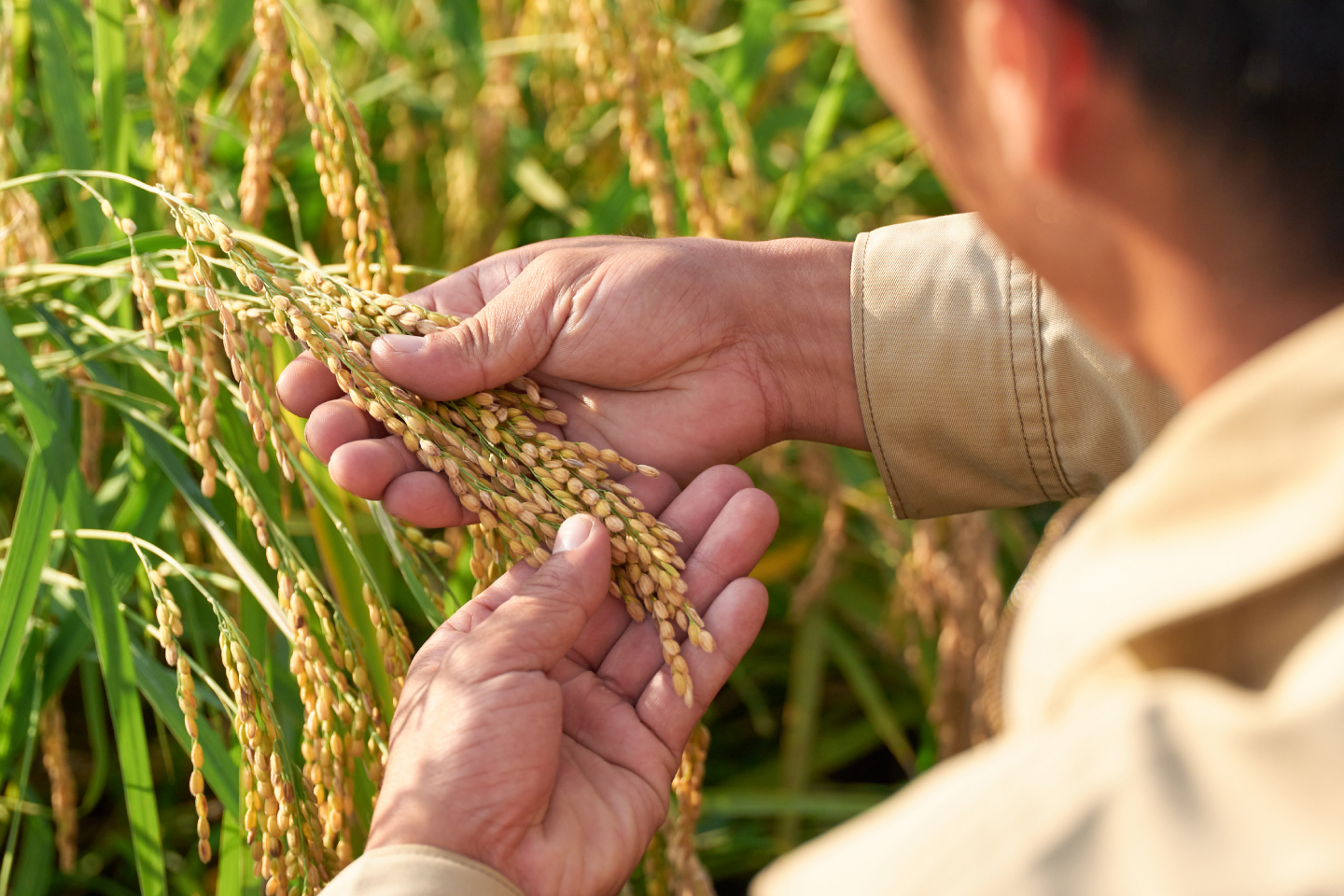
In 2013, the Ishikawa Prefecture — the Noto Peninsula’s governing body — approached Komatsu about helping revitalize rice farming and other agricultural practices. To ensure their future, local farmers would need to adapt new methods. What could they learn from one of the world’s leading manufacturers that could help them sustain their agriculture industry?
Komatsu agreed to help, partnering with the Ishikawa Prefecture and a nonprofit group called the Ishikawa New Agriculture Total Support Organization (INATO). This marked the start of an initiative to use dozers equipped with field-leveling technology to improve yield and dozers modified for direct seed cultivation to reduce costs. Field leveling is particularly impactful because it can also improve water retention and make subsequent farming practices, such as herbicide application, more efficient.
Until this time, Komatsu hadn’t thought much about using dozers in agricultural work. But collaboration with local rice farmers helped uncover new possibilities. The farmers put the equipment to work spreading gravel on farm roads and leveling rice fields. In time, they started to see how the dozers could be a critical help with the challenges ahead.
Harnessing people, machines and technology
Technology played a key role in the partnership’s first stages and became even more important after the earthquake. The Komatsu dozers use smart technology, meaning they were equipped to receive and process global navigation satellite system (GNSS) signals. This allows an operator to use precise positioning information to control the machine as it works. With basic training, even farmers with little experience could use it to level their land.
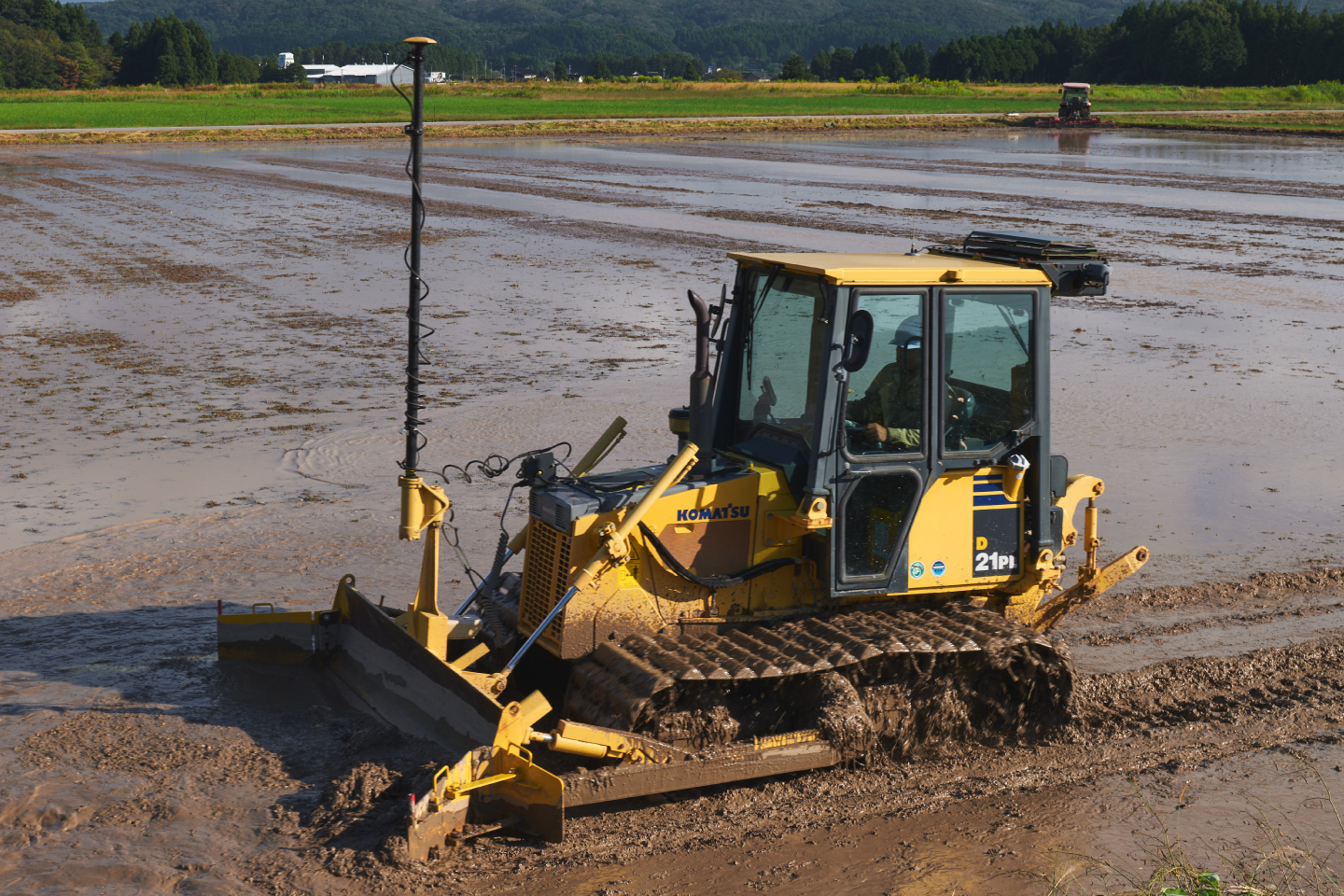
“The first time I sat behind the controls of an agricultural bulldozer, I was overwhelmed with its possibilities,” Ura said. The dozer could sense the uneven field, convert that information into digital data and automatically control the blade. “It moved as if a bulldozer expert were the operator. Its highly efficient operation resulted in no wasted effort.”
Understanding the way a machine works in the customer’s environment is a fundamental principle at Komatsu. Learning from the farmers about opportunities for improvement resulted in a relationship of trust between manufacturer and end user.
After the earthquake, trust that had been cultivated among the community, local support organizations and farmers helped accelerate rice paddy recovery efforts. Komatsu collaborated with project partners to assess the damage and demonstrate that farmers could repair small-scale cracks and uplifted areas by using the dozers. They then conducted operator training sessions. Komatsu loaned construction machinery free of charge to training participants.
Over a 15-month period, Komatsu loaned eight agricultural dozers to the effort, and 14 farmers were trained to operate them. Roughly 100 hectares of agricultural land were restored.
The work continues. Periods of heavy rain have delayed progress, but farmers are undaunted.
“We are only halfway down the road to recovery from the earthquake disaster, but the agricultural dozer has provided us with a ray of hope,” said Ura. “I want to make this initiative a success and encourage other farmers to follow my example.”
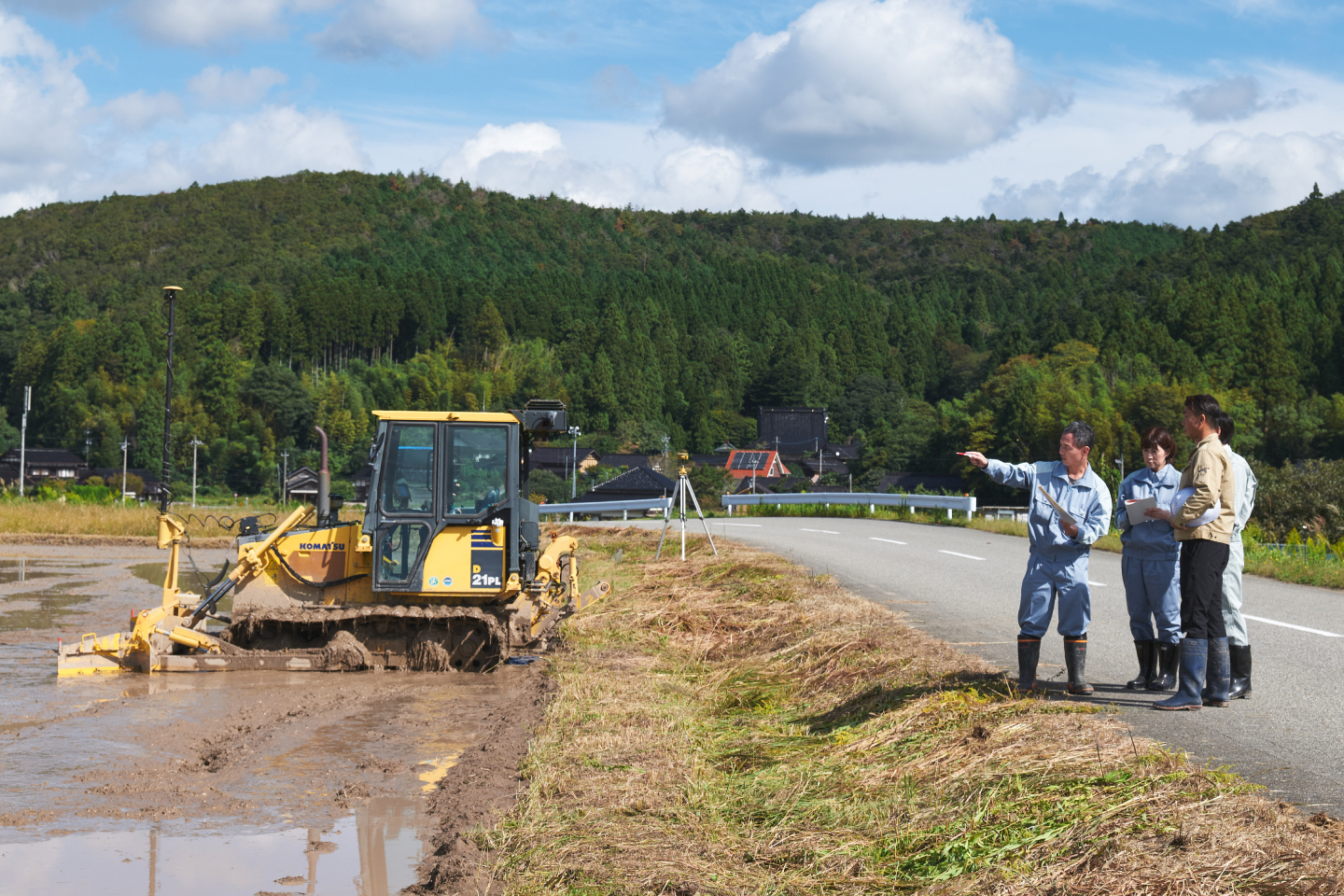
Pushing for progress together
A collaboration formed to ensure a future for the peninsula’s agriculture industry became an important part of its recovery after the earthquake. But Komatsu and their partners haven’t taken their eyes off the original goal.
According to an INATO staff member, “As the agricultural population declines in the future, not only agricultural dozers but also automatic control and other technologies will be essential to make agricultural work more efficient. The earthquake certainly caused great damage, but if farmers take advantage of this recovery to establish a foothold in the future, if they take on larger farmland parceling and transform their production methods, the future of agriculture in Noto will be bright.”
While Komatsu agricultural dozers are already saving both labor and time, the push to improve continues. For example, the dozer’s blade shape is being optimized for the farmers’ specific needs. In keeping with their promise of creating value together, Komatsu is continuing to tap the knowledge of all partners to pursue more opportunities.
“With a more accurate understanding of the needs and desires of these producers, we can create ever better products,” said Hideaki Makino, who’s part of the Komatsu team working on the Noto initiative. “And someday soon, Komatsu construction machinery will be a familiar part of the Noto landscape.”