3 min read
Oct 23, 2026
How underground hard rock mining reaches valuable minerals
- Career development,Company,Williams F1 partnership,Discover Komatsu
3 min read

Copper, nickel, zinc and gold help make electrical systems, transportation, infrastructure and technology possible. Some deposits containing these materials are mined from solid rock underground. See what makes underground hard rock mining different, why its equipment is specialized and how people, machines and technology work together.
Before copper can carry electricity or nickel can become part of an advanced alloy, material containing those minerals has to be found, evaluated and recovered. Mining is one way that material enters the longer chain of processing, refining and manufacturing that eventually turns it into something useful.
But mines do not all look alike. Mineral deposits differ in depth, shape, concentration and surrounding geology. Those characteristics help determine how a deposit can be accessed. A deposit relatively close to the surface may be suited to surface mining. Another may extend farther underground, follow a narrow mineralized zone or sit within rock conditions that make underground development more practical.
Copper, for example, can come from surface or underground mining; the deposit and site conditions help determine the method.
That is where underground hard rock mining begins: with the geology, not the machine.
Underground hard rock mining develops tunnels and production areas below the surface to recover minerals from solid rock deposits. In this article series, that includes deposits containing materials such as copper, nickel, zinc and gold. Underground soft rock mining, including industrial minerals, such as salt, potash and gypsum, as well as coal, is a different mining environment.
The distinction matters because an underground hard rock mine must create working space inside solid rock while continuing to manage the rock around those openings. Access, ground support, ventilation, water, power, communications and traffic all have to advance as the mine develops. The result is less like one large excavation and more like a growing network built around the shape of the deposit.
That changing, constrained environment is one reason underground hard rock equipment looks and works differently from the machines many people picture when they think of mining.
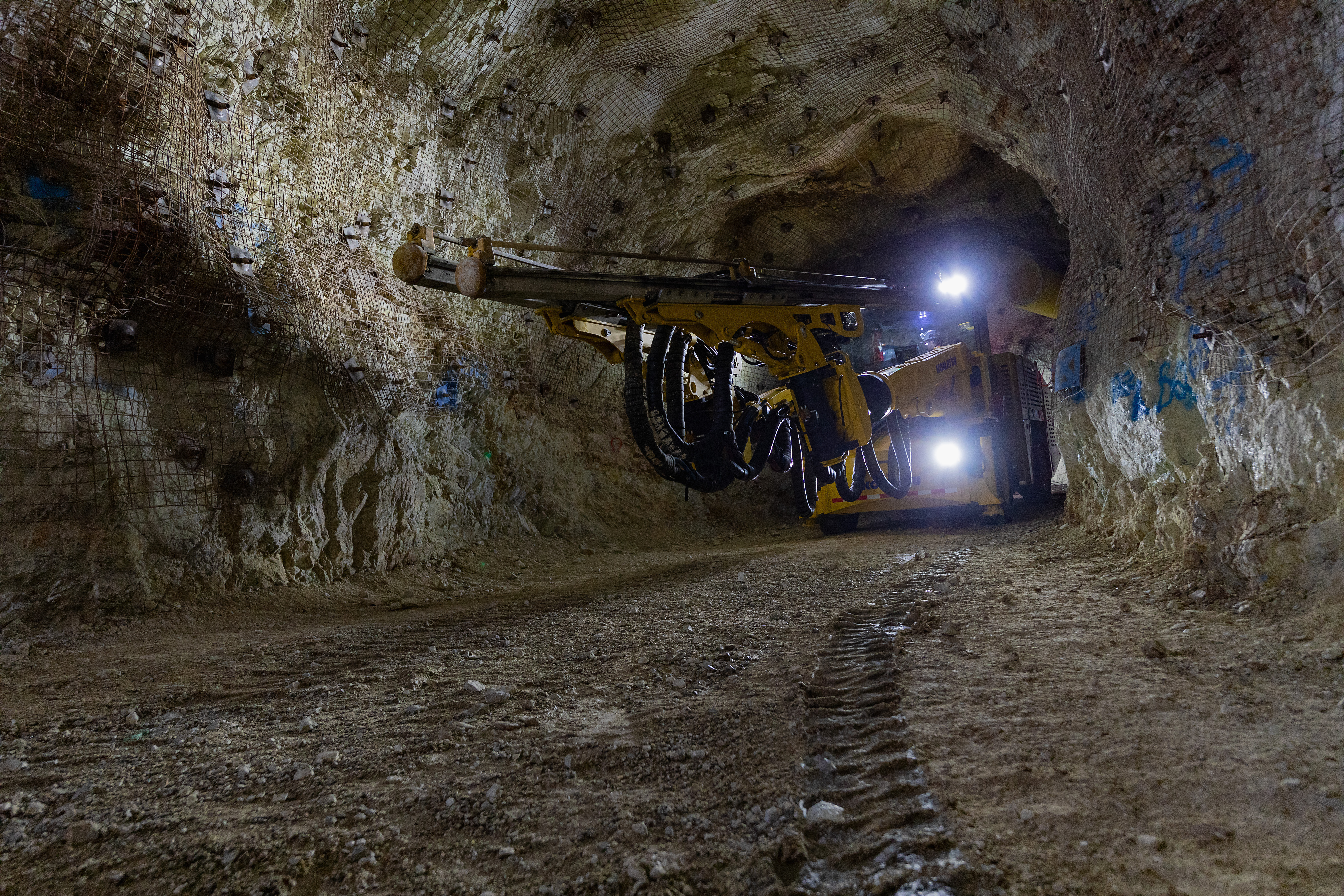
A jumbo drill moves through underground openings to reach the rock face, where its booms position drills for the next advance. Tunnel dimensions, ground conditions and access all influence the equipment used for the work.
Before production can move through an underground hard rock mine, teams first have to create safe, workable access to the deposit. Ramps, tunnels and shafts connect different elevations and working areas. As development advances, ventilation, power, water, communications and ground support must advance with it.
That work requires equipment built for specific underground tasks. Drill jumbos are mobile drilling machines with one or more booms that position drills at the rock face. The holes they create can be used in controlled blasting to advance a tunnel or prepare rock for production. Bolters drill and install reinforcement that helps support underground openings. Shaft sinking equipment supports the development of vertical access where the mine design requires it.
The equipment also has to fit the mine. Tunnel dimensions, turning space, ground conditions and the work being performed influence machine size and configuration. Not every mine uses every machine or method; the fleet is selected around the deposit and mine design.
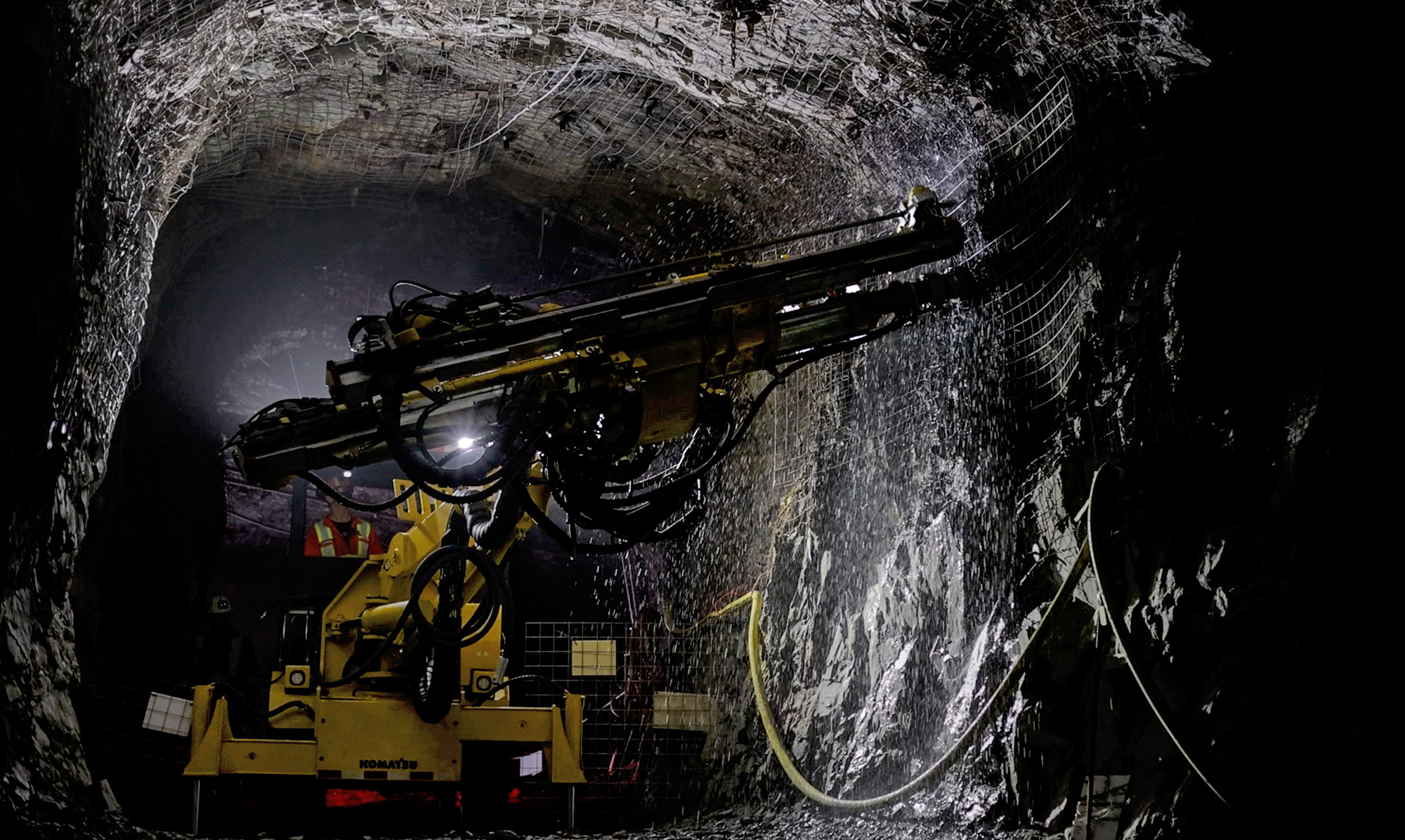
Once rock is broken through drilling and controlled blasting or, in some mines, mechanical excavation, the challenge changes from creating access to moving material through it. Load-haul-dump loaders, called LHDs, use a bucket to collect broken rock and carry it through underground working areas. They may transfer material to an underground truck, crusher or another planned transfer point. Trucks can then move larger loads along haul routes toward a crusher, shaft, ramp or other destination, depending on the mine design.
These machines are specialized for the same reason the development equipment is: they have to work within underground clearances, travel routes and traffic patterns while sharing space with people, service vehicles, utilities and other activities. A delay at a loading point can affect haulage. Congestion on a ramp can slow both people and material. Maintenance can change equipment assignments across a production area.
The useful measure is therefore not simply how fast one machine works. It is how well the whole material-movement cycle stays coordinated.
Once rock is broken, load-haul-dump loaders help move it through the mine. The LHD is built for smaller underground openings and uses its bucket to load and carry material through narrow working areas before it moves to the next stage of haulage.

An underground mine can limit something most people take for granted above ground: satellite-based positioning. Because it is generally unavailable underground, mines use other communications, tracking and positioning systems to help connect people, equipment and working areas.
Teams also use operating information to understand what is happening across the mine. Equipment data may prompt an inspection. Location information may help a dispatcher adjust traffic. Updated geological information may change a development or production plan. Remote and automated capabilities can support selected tasks, while battery-electric equipment is one option mines may evaluate as they consider ventilation, energy use, emissions and operating requirements.
Technology does not remove the need for judgment. Operators, engineers, maintenance teams, supervisors and dispatchers interpret the information and decide what action fits the conditions. The value of a connected system comes from helping those people see a problem sooner, coordinate a response or make a better-informed decision.
Underground operations rely on more than machines and people, they also rely on knowing what is happening across the mine. Connected systems can bring equipment, location and operational information together, giving teams a clearer view of activity and helping them coordinate work as conditions change.

Mining companies plan and operate underground mines. Komatsu supports those customers at various stages of the underground hard rock cycle with equipment, technology, service and technical expertise. Depending on the application and region, the portfolio can include shaft sinking equipment, development and bolting drill jumbos, underground loaders and trucks, battery-electric equipment and connected technologies. Support can also include parts, rebuilds, maintenance planning, training and technical services.
The important point is not the length of the equipment list. Each category exists because the mine has a different job to solve: Create access, support the opening, break rock, move material, maintain equipment or help people understand what is happening across the operation.
That is what makes underground hard rock mining distinctive. The mine is not simply below ground. It is a connected working system that has to keep adapting to geology, access, ground conditions, material flow and the people doing the work.
Equipment and operating systems can provide information about fleet movement, payload, machine condition and production progress. That information is used to coordinate work, plan maintenance and respond as geological conditions or priorities change.

See how mining teams across surface and underground operations combine skilled people, equipment, technology, service and support, and how Komatsu works alongside customers to help address complex operational challenges.
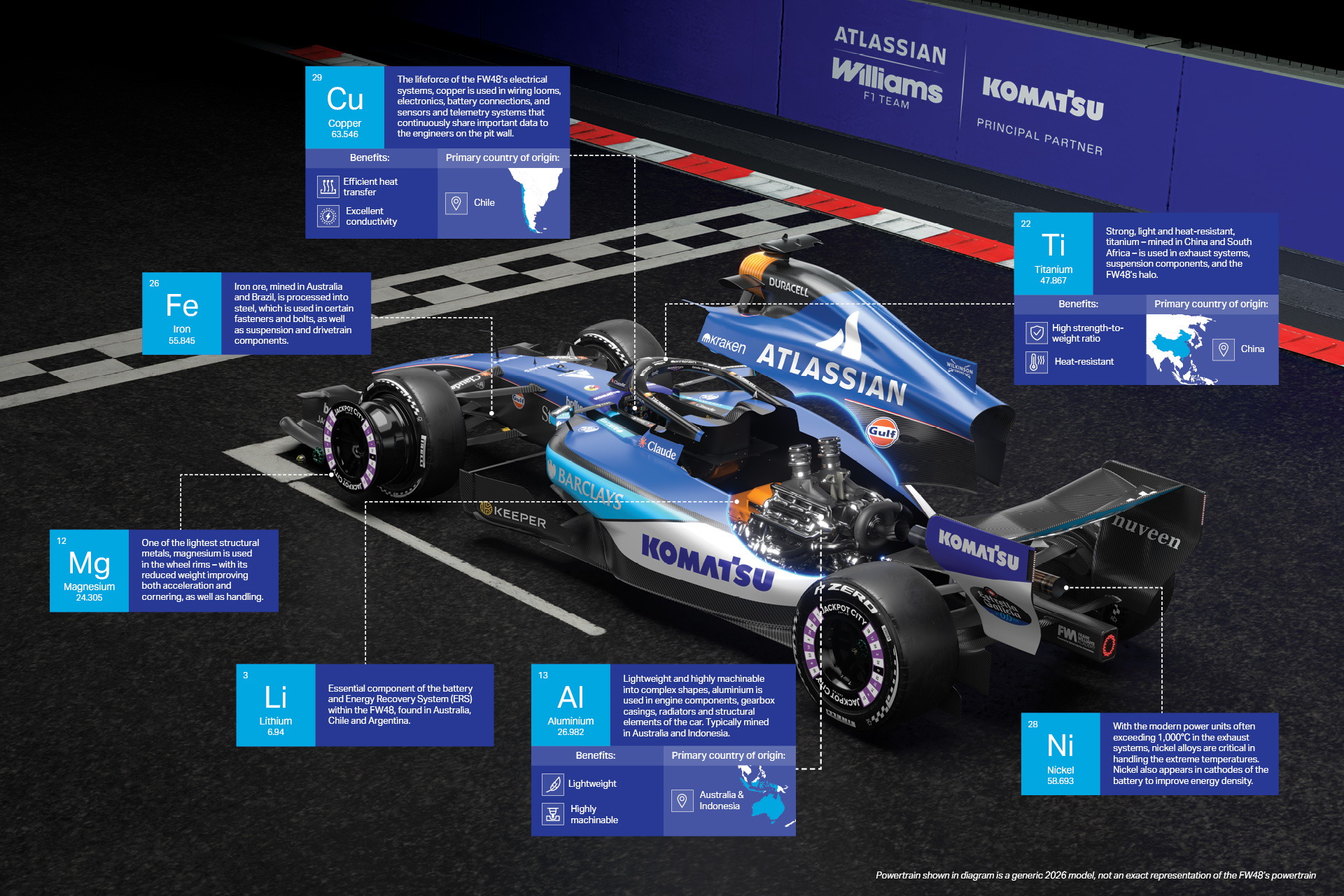
Ever wondered what a race car is actually made of? Discover how Komatsu’s mining machines help build Atlassian Williams F1 Team’s FW48.