
.svg)

.svg)
Powering the transition:
Decarbonization through integration
Reducing emissions in mining is a system-wide challenge that cannot be solved by a single technology or provider. It requires strategic coordination between trusted industry partners of machines, energy systems and operations.
Komatsu brings together autonomy, electrification, AI and digital platforms into a unified approach that improves safety and supports more productive mining while advancing the path toward a lower-carbon future.
Decarbonizing underground mining without compromising productivity
As mining operations work to decarbonize, the industry needs equipment that can reduce reliance on diesel without sacrificing the performance, durability, and productivity required underground. Electrification plays a critical role by helping mines lower emissions, reduce heat generation, and ease ventilation demands, while also creating a better working environment for operators. To make this transition practical, mining companies need purpose-built solutions that can perform reliably in tough underground conditions, maintain high availability, and support efficient, continuous production.
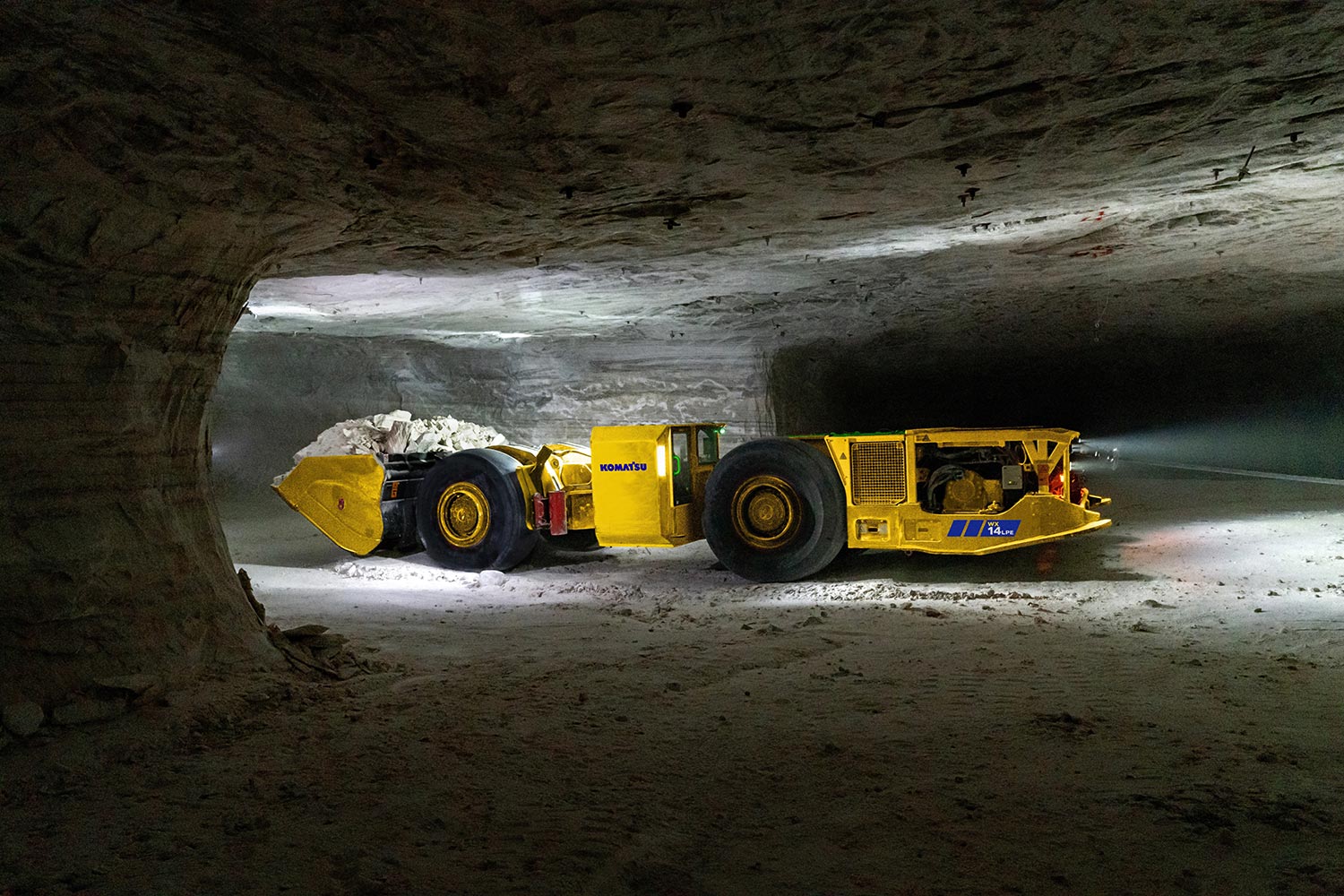
Discover Komatsu’s next‑generation 14‑tonne tethered‑electric load–haul–dump (LHD) WX14LPE with direct drive and continuous spooling. This loader is purpose‑designed for continuous, high‑productivity underground mining with zero local emissions.
Decarbonization depends on connection
New energy solutions matter. But lasting impact comes from how technologies and suppliers work together across the operation. By connecting equipment, energy and workflows, mining operations can reduce waste, improve efficiency and take meaningful steps toward lowering carbon intensity.
- Energy use aligned with real-time production demands
- Improved efficiencies across the value chain
- More consistent, coordinated operations
Introducing Komatsu's WX04B groundbreaking battery-electric load haul dump (LHD) designed for underground hard rock mining with zero local emissions. The only 4-tonne loader with a ground-level battery swap.

Integrating processes and technologies to move mining forward
Progress toward decarbonization is driven by how you operate and what you operate.


Connected systems. Measurable progress.
A pathway built for progression
The transition to lower-carbon mining is a journey. Technologies, energy strategies and site requirements will evolve at different paces.
Komatsu’s integrated approach is designed to support that phased progression, helping you adopt new capabilities while maintaining the productivity and operational continuity required for success.
Progress over time. Value at every step.

Better together
Autonomy improves consistency. Electrification reduces emissions. AI enhances decision-making.
When these technologies operate together as a connected system, they create greater impact, helping mining operations improve safety and move toward more efficient and lower-carbon outcomes at scale.
Integration is how progress scales.

Scaling electrification: Why automation is essential
Manual charging is a bottleneck for ultra-class electric fleets. At the megawatt scale, charging must operate as production infrastructure. Learn how automated charging reduces variability, promotes safety and maintains duty cycles while preparing your operation for integrated energy management.
