• calendar

    21 October 2026

  • Staff writer

  • Quarry, Blog

4 min read

Komatsu WA485-11 wheel loader moves more material with less fuel

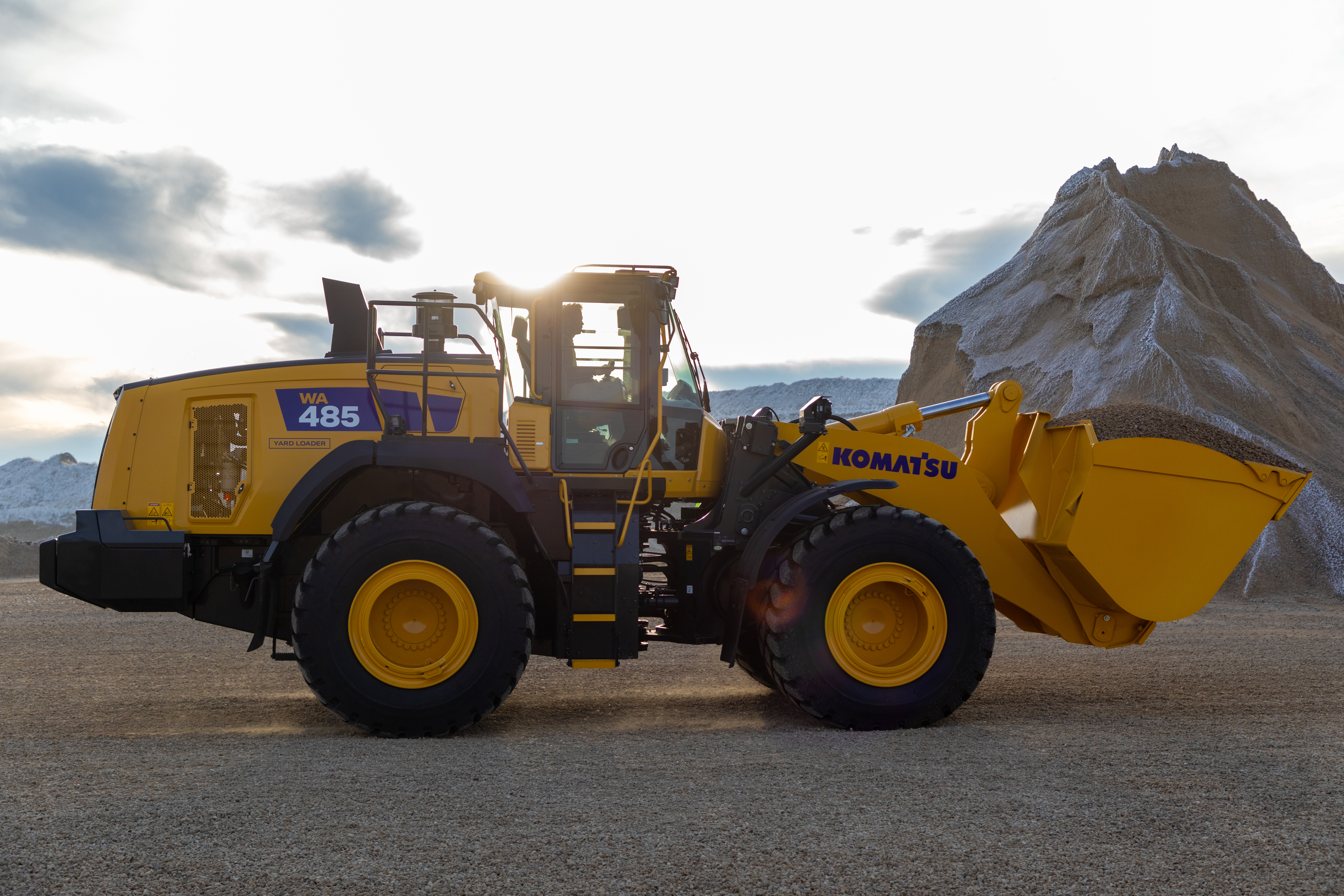
A Komatsu wheel loader in a quarry setting.

Last reviewed: 22 September 2026

Komatsu Australia has launched the WA485-11 wheel loader in Australia and New Zealand, with improvements focused on productivity, fuel efficiency, operator comfort and maintenance access.

For quarry and aggregate operations, the WA485-11 combines Komatsu’s hydraulic mechanical transmission (KHMT), a redesigned bucket, increased operating capacity and greater breakout force. In Komatsu test-centre testing, the WA485-11 delivered a 28% improvement in fuel efficiency compared with the WA480-8 in P mode during load-and-carry operation.

What does the WA485-11 offer quarry and aggregate operations?

The WA485-11 is suited to quarrying and aggregate applications including stockpiling, load-and-carry work and truck loading.

Nick Vrontas, National Business Manager at Komatsu Australia, says the wheel loader was developed with a focus on reducing customers’ total cost of ownership.

“The WA485-11 was developed using years of direct customer feedback about what matters to them and their operations, including efficiency, power, safety and operator comfort. It builds on the proven performance of the WA480-8 while introducing significant design improvements that allow customers to move more material while improving efficiency,” Nick says.

For operators and equipment buyers, the changes span the machine’s transmission, bucket and operating capacity, as well as the cab, safety systems and maintenance access.

A Komatsu wheel loader on a quarry site.

KHMT and fuel efficiency

The WA485-11 features Komatsu’s hydraulic mechanical transmission, which combines hydrostatic and mechanical transmission technology.

KHMT’s control system assesses the work situation and load based on operator commands and automatically controls power distribution between the work equipment and travel systems. This allows the engine to operate at lower speeds while maintaining the acceleration and performance required for the task.

In Komatsu test-centre testing, fuel efficiency measured in tonnes per litre improved by 28% compared with the WA480-8 in P mode during load-and-carry operation.

“KHMT keeps the engine operating at lower speeds and automatically distributes power between the travel and work equipment systems based on operating conditions. This helps reduce fuel consumption while maintaining the acceleration and performance operators need,” Nick says.

How does the WA485-11 move more material per cycle?

The WA485-11 has a redesigned bucket with a cross-sectional shape designed to make material easier to scoop and reduce spillage, contributing to a higher bucket fill rate.

Compared with the WA480-8, the WA485-11 has a 12.5% increase in operating capacity and 20% more breakout force by the lift cylinder. The increased operating capacity allows the machine to carry more material per bucket.

“What matters on site is how much material a machine can move across the day and how much fuel it takes to do it. The WA485-11 has been designed to deliver a better result on both,” Nick says.

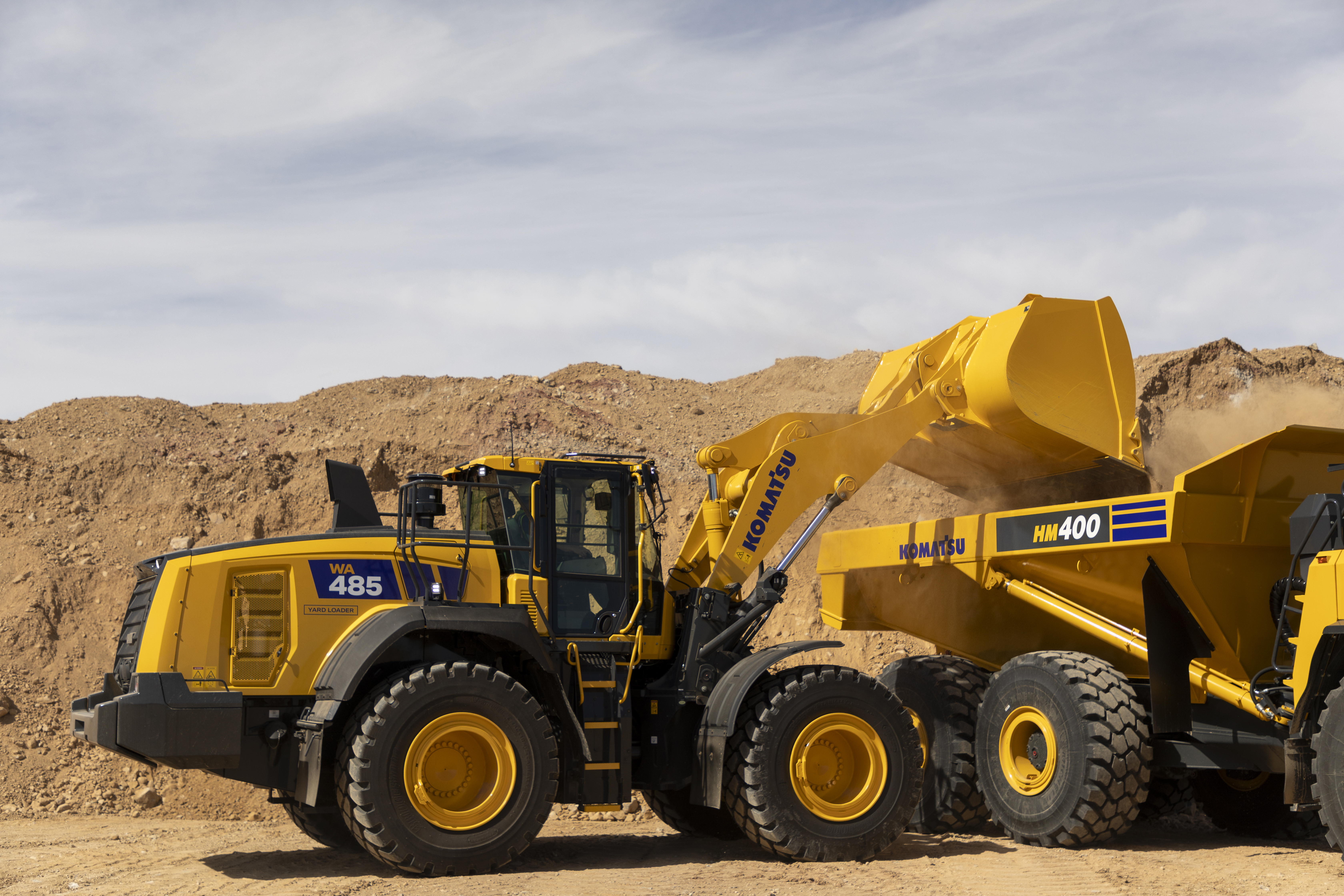
Komatsu wheel loader loading a truck

A redesigned operator environment

The WA485-11 also introduces a newly designed cab focused on visibility and operator comfort.

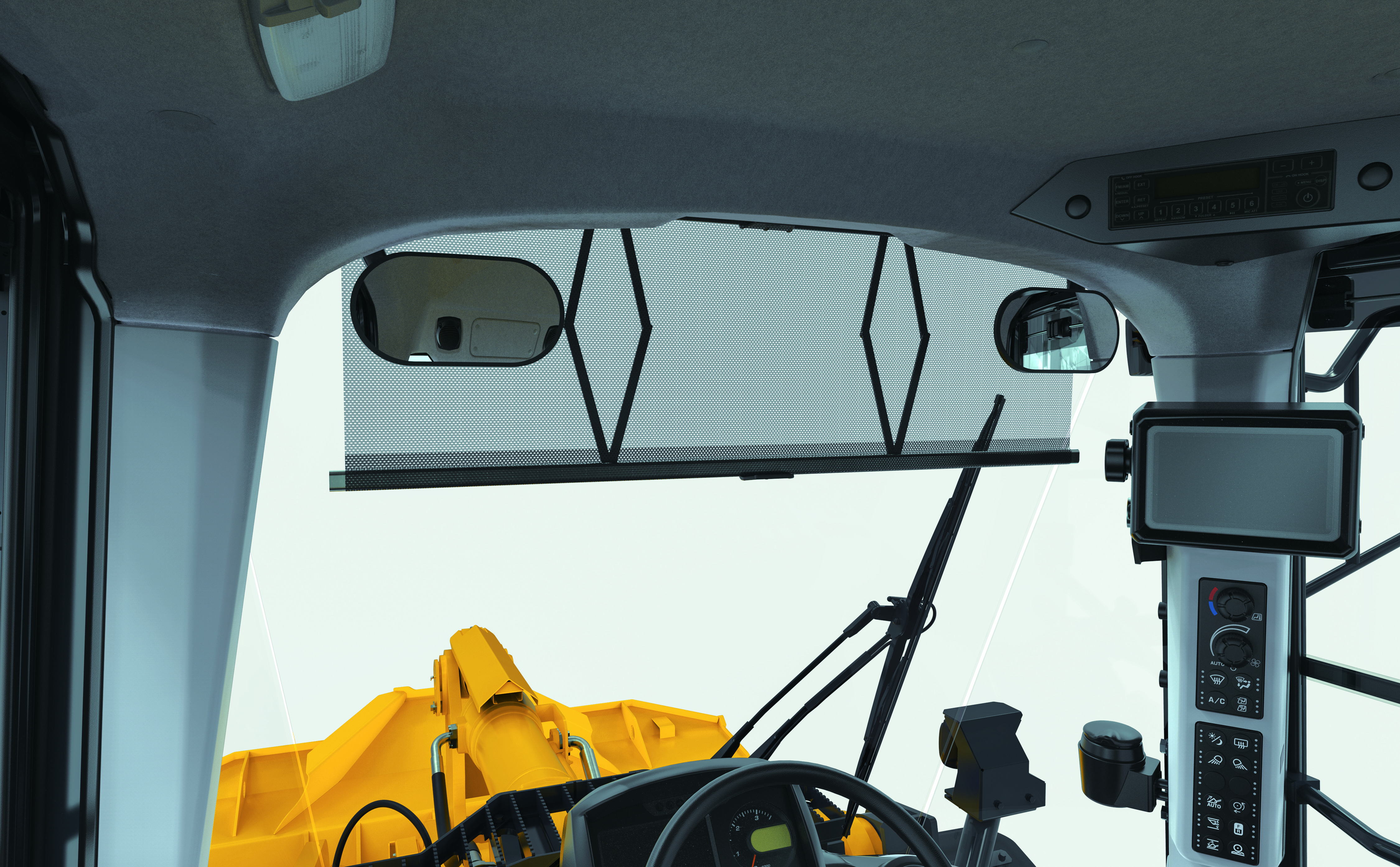
The front and rear cab glass surface area has increased by 21% compared with the WA480-8. A lower glass area and the removal of the rear pillar improve visibility around the machine.

The operator environment includes a five-way adjustable console, angle feedback joystick steering (AFJS), automatic air conditioning and a deluxe seat when AFJS is selected.

AFJS articulates the machine according to the tilt angle of the joystick. Its control system converts joystick movement into electrical signals and applies reaction force to the joystick to support intuitive steering.

An inside view in the cab of a Komatsu wheel loader.

What safety systems does the WA485-11 include?

The WA485-11 features an upgraded KomVision monitoring system and a rear object detection system.

The rear object detection system uses two radars mounted at the rear of the machine to detect people, objects and working machines in the machines path while reversing. When the system identifies a collision risk, a warning buzzer and indicator light alert the operator.

The system has performance limitations and is not designed to prevent collisions under all conditions. Operators must use it in accordance with the Operation and Maintenance Manual.

KomVision uses four wide-angle, high-definition cameras to provide a 360-degree view of the area around the wheel loader, including a bird’s-eye view from above the machine.
 

Easier maintenance access

Maintenance access has been improved with a powered tiltable engine hood and swing-out hydraulic cooling fan.

Hood side covers provide access to areas requiring daily inspection and maintenance, while the cooling fan can be swung out to provide access for radiator cleaning.

These changes are designed to make frequently serviced areas easier to reach.
 

What do the changes mean across a working day?

The WA485-11 brings together increased operating capacity and fuel-efficiency improvements designed to help move more material while reducing fuel consumption

For quarry and aggregate operations, these productivity improvements are complemented by improved visibility, operator-focused cab features, safety systems and easier maintenance access.

Nick says the benefits become most evident when considered across an entire working day.

“For our customers, the real value comes from what these improvements add up to over a full shift. Moving more material in each cycle while using less fuel can make a meaningful difference to both production targets and cost per tonne.”
 

Key takeaways

  • The WA485-11 is designed for applications including stockpiling, load-and-carry work and truck loading.
  • Komatsu test-centre testing recorded a 28% fuel-efficiency improvement versus the WA480-8 in P mode during load-and-carry operation.
  • Operating capacity has increased 12.5%, while breakout force by the lift cylinder has increased 20% compared with the WA480-8.
  • Front and rear cab glass surface area has increased 21% compared with the WA480-8.
  • Safety equipment includes KomVision and a two-radar rear object detection system.
  • Maintenance features include a powered tiltable engine hood and swing-out cooling fan.      

Related articles